Categories
Asia Noise News Building Accoustics Building Acoustics Environment Home Industrial Noise and Vibration Product News Noise-th Uncategorized Vibration

Industrial Noise Control Measure

In industrial places that are normally full of machineries or mechanical systems, noise is definitely inevitable, and in fact, very loud. This can sometimes be harmful to the workers hence causing occupational health and safety hazard. Therefore, in this article, we will look into noise control measures that can be used to overcome industrial noise in workplace.

Noise sources

Let’s begin with a recap on how noise is being produced:

Sound in general, is produced by vibration, or sometimes due to aerodynamic systems. Vibration-induced noises can be caused by multiple reasons, for example:

  • Mechanical shocks and friction between machinery parts like hammering, rotating gears, bearings, cutting tools etc.
  • Moving parts that are off-balanced
  • Vibration of large and heavy structures

As for aerodynamic noises, they are caused by air or fluid flows through pipes, fans, or pressure drops in air distribution systems as well. Typical examples of aerodynamic noise sources are:

  • Steam released through exhaust valves
  • Fans
  • Combustion motors
  • Aircraft jets
  • Turbulent fluid flow through pipes

Steps to control noise in workplace

To properly control the noise in the workplace, these steps should be carried out:

  1. Identify the sound sources (i.e., vibrating sources or aerodynamic flow)
  2. Identify the noise path from source to worker
  3. Determine the sound level of each source
  4. Determine the relative contribution to the excessive noise of each source and proceed to rank the sources accordingly. The dominant source should always be prioritised and controlled first in order to obtain significant noise attenuation.
  5. Understand the acceptable exposure limits as written in the health and safety legislation and find out the necessary sound reduction.
  6. Find out solutions while taking the degree of sound attenuation, operation, productivity restrains and cost into consideration.

To reduce exposure to noise

In general, noise exposure can be reduced by the elimination of noise source if possible, otherwise substitution of source with a quieter one or the application of engineering modifications works too.

The most effective way to minimise the exposure of noise is to engineer it out at the very beginning: the design stage. It is suggested to always choose equipment features that can reduce noise level to an acceptable level. For new installations, again select a quiet equipment, and make sure to have a procurement policy that opts for using quiet equipment, and finally eliminate any design flaws that may lead to noise amplification.

Engineering modifications refer to changes that can affect the source, or the sound path. This is usually the preferred solution for noise control in already-established workplaces (those without noise protection measures during design stage). This is because engineering modifications are known to be more cost effective, especially to control the noise at the source than along the path.

Administrative controls and the use of personal protective equipment (PPE) are also effective as measures of noise control applicable on workers themselves. A combination of both may be taken into consideration when the noise exposure would not justify the implementation of engineering solutions that are more expensive. However, it is important to always note that administrative control and PPE may not be as effective as implementing engineering noise control during the starting stage or modifications of sound path. Therefore, they should be categorised as the last resort.

Engineering solutions to reduce noise

Different solutions can be applied for vibration-induced noise and aerodynamic-noise.

For vibration-induced noise, the key point is to reduce the amount of vibration at the source. The typical solutions include modification of the energy source such as lowering the rotating speed of fans, or reducing the impact force of hitting tools etc. Adding damping materials onto vibrating surfaces due to mechanical forces can help to reduce vibrational effects too, especially for thin structures. To prevent unwanted damage due to friction or impact, the damping material may be sandwiched between the surface of equipment and another material that is resistant to abrasion. This treatment is called the constraint layer treatment.

Other methods to reduce vibration-induced noise include minimising gaps in machine guards and cover them with acoustic-absorbent material, replacing metal parts with plastic parts whenever possible, and replacing motors with quieter ones.

On the other hand, to treat aerodynamic-induced noise, specialists recommended to implement engineering practices that are capable of reducing noise associated with unstable fluid flow, for example minimising fluid velocity, increasing pipe diameter or minimising turbulence by utilising large and low speed fans with curved blades.

Besides those mentioned above, there are also passive noise control measures that can be used. These include using enclosures and isolations by storing noisy equipment in enclosed spaces/rooms that have special acoustic features like isolation, louvres or sealings. Installations of acoustic barriers (sound-absorbing panels) in workplaces, or silencers inside ducts and exhausts works well in attenuating unwanted noise too.

General measures to keep in mind

Finally, here are some general methods that one can take to ensure that workplace noise is under controlled.

Regular maintenance should always be performed, where the focus should be on identifying and replacing any worn-off or loose parts, lubricating any moving parts, and make sure that the rotating equipment does not get off balance to avoid vibration-induced noise.

Noisy processes should be taken note about and be substituted with quieter ones. Sound reverberation in the room should be reduced. Reverberation is when sound produced in an enclosure hits reflective surfaces and reflects back into the room in addition to the original noise paths. In some cases, reverberated sounds may dominate the original sound. A good method to help in such conditions will be to add padding onto the reflective surfaces with sound absorbing materials so that noise level can be reduced. Another way will be to arrange the equipment in the room so that they are not too close to too many reflective structures.

Conclusion

In conclusion, always take measures to identify the sound sources in the industrial workplace and find out suitable ways to solve the noise issues to achieve noise limits in accordance with exposure limits set in the health and safety legislation published by the local authorities. It is utmost important to obey the noise exposure limits to ensure the hearing health of workers in the workplace.

Reference

https://www.ccohs.ca/oshanswers/phys_agents/noise_control.html

https://www.who.int/occupational_health/publications/noise10.pdf

Categories
Noise and Vibration Product News

ListenEAR noise dosimeter, noise dosemeter OSHA, ISO9612

Listen Ear Personal Noise Dose Meter Noise & Vibration Registration Instruments and Software, ISO9612, OSHA

LOW COST, PROFESSIONAL NOISE DOSE METER

Compact Light Design Easy Mounting in Hearing Zone Long Life

Rechargeable Battery

• (up to 160 hours/4 Working Weeks)

Time History Data Logging

•10s 10min Data Recording Intervals

•Download to PC via USB Cable

•Real Time Data via Bluetooth to FREE Android App Full Noise Dosimeter Functions:

•Fast & Slow Time Weighting

•A, C, & Z Frequency Weightings

•Equivalent Continuous Noise Dose (LEQ)

•Noise Exposure over 8 Hours (LEX8h)

•Current Dose Projected Dose at 8hrs Temperature & Humidity Readings Complies with IEC61672-1, IEC61252 Visual 2 Tier Alarm Setting Optional External Microphone •AntiKnock, Movement and Orientation Monitoring

•Ability to Pre-Program with Ear Defender SNR Values

ON-SCREEN VIEWS  CURRENT PLUS MIN & MAX SOUNDLEVEL

READ MORE….

Categories
Asia Noise News Building Accoustics Building Acoustics Environment Home Industrial Noise and Vibration Product News Noise-th Uncategorized Vibration

Sound Absorption

What is Absorption?

Absorption refers to the process by which a material, structure, or object takes in energy when waves are encountered, as opposed to reflecting the energy. Part of the absorbed energy is transformed into heat and part is transmitted through the absorbing body. The energy transformed into heat is said to have been ‘lost’. (e.g. spring, damper etc.)


What is Sound Absorption?

When the sound waves encounter the surface of the material: part of them reflects; part of them penetrate, and the rest are absorbed by the material itself.

Formula for Sound Absorption: –

The ratio of absorbed sound energy (E) to incident sound energy (Eo) is called sound absorption coefficient (α). This ratio is the main indicator used to evaluate the sound-absorbing property of the material. A formula can be used to demonstrate this.


α (absorption coefficient) =E (absorbed sound energy)/ Eo (Incident sound energy)


In this formula: α is the sound absorption coefficient;

  E is the absorbed sound energy (including the permeating part);

  Eo is the incident sound energy.


Generally, the sound absorption coefficient of the materials is between 0 to 1. The larger the numeral is, the better the sound absorbing property. The sound absorption coefficient of suspended absorber may be more than one because its effective sound-absorbing area is larger than its calculated area.


Example: If a wall is absorbed 63% of incident energy and 37% of energy is reflected then the absorption coefficient of wall is 0.63.


How can we measure Absorption Coefficient?


The absorption coefficient and impedance are determined by two different methods according to the type of incident wave field.


  1. Kundt’s tube (ISO 10534-2)
  2. Reverberation room (ISO 354)


Kundt’s Tube Measurement Method: (ISO 10543-2)

For measurement of small specimen use Kundt’s tube or Impedance tube also called as Standing wave tube.  The result from measurement of absorption factor and acoustic impedance, using the standing wave method, obviously are meaningful only when assuming these to be independent of the size of the specimen, which is normally quite small.  The absorption factor for normal incidence is determined by measuring the measuring the maximum and minimum pressure amplitude in the standing wave set up in the tube by a loudspeaker. 

This basic technique is, an mentioned in the introduction, considered a little outdated in comparison with more modern methods based on transfer was implemented relatively late (1993) in an international standard, ISO 10534-1, after being used for al least 50 years.  Commercial equipment has also been available for many decades.  However, there exists a second part of the mentioned standard, ISO 10534-2, based on using broadband signals and measurement of the pressure transfer function between different positions in the tube.  ISO 10543-2, which implies the specified two microphone method is extended to spherical wave fields.

Normally Placid Impedance tube is used for absorption coefficient and transmission loss measurement. 

(https://www.placidinstruments.com/product/impedance-tube/)

The above fig shows Impedance tube


Click here to refer Placid Sound absorption measurement  

Click here to refer Placid Sound transmission loss measurement


Reverberation Room: (ISO 354)


              Reverberation Room method is traditional method, measurement of the absorption factor of larger specimens is performed in a reverberation room.  One then determines the average value over all angles of incidence under diffuse field conditions.  The product data normally supplied by producers of absorbers are determined according to the international standard ISO 354, required for measurement is 10-12 square meters and there are requirements as to shape of the area.  The reason of these requirements is that the absorption factor determined this method always includes an additional amount due to the edge effect, which is a diffraction phenomenon along the edge of the specimen.  This effect makes the specimen acoustically larger the geometric area, which may result in obtaining absorption factors larger than 1.0.  Certainly, this does not imply that the energy absorbed is larger than the incident energy.


Sound Absorption coefficient of different materials:

The sound absorption of the material is not only related to its other properties, its thickness, and the surface conditions (the air layer and thickness), but also related to the incident angle and frequency of the sound waves. The sound absorption coefficient will change according to high, middle, and low frequencies. In order to reflect the sound-absorbing property of one material comprehensively, six frequencies (125Hz, 250Hz, 500Hz, 1000Hz, 2000Hz, 4000Hz) are set to show the changes of the sound absorption coefficient. If the average ratio of the six frequencies is more than 0.2, the material can be classified as sound-absorbing material.

Application of Sound Absorber:

These materials can be used for sound insulation of walls, floors, and ceilings of concert hall, cinema, auditorium, and broadcasting studio. By using the sound absorbing material properly, the indoor transmittance of sound waves can be enhanced to create better sound effects.

Select your sound absorber from https://www.blast-block.com/

Categories
Asia Noise News Building Accoustics Building Acoustics Environment Home Noise and Vibration Product News Uncategorized Vibration

Acoustic Treatment in Schools

Several generations of students and teachers have battled the inherent problems caused by noise and poor acoustic design in educational settings. Despite the problem having been recognized for over 100 years, acoustics in classrooms remain under-addressed in older buildings and many newer built schools. A 2012 released study “Essex Study-Optimal classroom acoustics for all” defines the need and benefits of acoustically treating classrooms. The study looked at the impact of reducing reverberation time in a working classroom environment. The conclusion drawn after several measurements of acoustics and surveys with participants was a demonstrable clear benefit to all by improving the acoustic environment. Simply, uncontrolled reverberations in a classroom have a direct negative effect on health and performance, for both students and teachers.

Reverberation is the echo of sound reflecting from hard surface to hard surface causing noise to build up and creating a confusing, unintelligible mass of sound. The hard surfaces such as windows, blackboards, concrete blocks and gypsum walls found in most classrooms do not absorb sound energy and as a result, the sound reflects back into the room, arriving at the ear many times at intervals that are milliseconds apart. This creates a sound that is smeared and the brain has difficulty distinguishing the primary information and disseminating it from the reverberation. This problem is exacerbated when hearing assist devices and cochlear implants are used. Excess reverberation also affects students with auditory processing issues, ADHD, and other learning challenges. In fact, all students benefit from lowering the reverberation and improving intelligibility.

Reverberation is measured in relation to time. The measurement (RT60) is the time it takes for sound to decay by 60dB in a particular space. The greater the reverberation time, the more “echo” in a room, and the greater the listening challenges become. The reverberation time of a room will depend on variables such as the size of the classroom, the reflective surfaces, and how other absorbent or reflective features in the room may increase the effect.


The Effect on Students and Teachers
Most learning occurs from the verbal communication of information and ideas. Traditionally, classrooms have not been designed with attention to how the room sounds or how it may affect the students and teachers that are using it. It is well known that proximity to the teacher increases student engagement and the comprehension of the material being taught. As most classes have 30 or more students in it, it is impossible for every student to be close to the teacher. For students at the rear of the class, the volume level reaching the students will be reduced by as much as 20dB compared to when it is created. The brain then has to differentiate whether the sound being received is the source material or the sound bouncing off the walls. When one factors in the natural reverberation in the room, the delay in sound reaching the ear, along with distractions such as HVAC noise, the classroom base-level sound and noise seeping in from outside the doors and windows, it is not surprising to find that many children are simply not hearing the material they are being taught.
And this is only the beginning. As the ambient sound level in the classroom increases, the teacher naturally increases his or her voice level. The ‘classroom chatter’ naturally increases to compensate and the problem exacerbates to the point where the teacher and students begin to lose concentration.

Children do not Listen Like Adults
When you consider the acoustic problems described, studies suggest that as many as 30% of students may actually be challenged in understanding their teacher’s message. Poor intelligibility due to proximity to the teacher, excessive reverberation and noise result in a lack of comprehension of the material being taught.
Most adults would not notice these challenges as life experience allows us to “fill in the missing words”.

The solution is to acoustically treat the classroom
Right from the early days of radio, broadcasters came to the conclusion that unless the source broadcast was clear and concise, the message would get lost. To address the problem, absorptive acoustic panels were mounted on the broadcast studio wall surfaces to suppress the reflections and improve intelligibility for the listener. This practice continues to this day and the same rules apply whether you are teaching in a classroom, delivering a message in a house of worship or broadcasting a distance learning class over the internet.

A popular solution is to suspend the panels from the ceiling. The added benefit of the airspace created behind the panel when suspended increases the panel’s absorptive surface area. This is particularly effective in noisy cafeterias. For classrooms with T-bar ceilings, there are acoustic tiles that can replace the original non-absorptive compressed fiber tile. Actual panel placement is not as critical as one may think. It is more about using available space to your best advantage by evenly distributing the panels around the room.
A classroom free from excessive reverberation and noise is far more conducive to learning and greatly contributes to better student success – whether the student has learning issues or not. Reducing the ambient sound level also makes it easier to teach, reduces teacher stress and burnout, and significantly reduces listening fatigue for everyone. When you consider the teacher – student benefits and the relatively low cost involved installing acoustic treatment, a practical solution for school districts and post secondary institutions that care about attaining the maximum results from their student body is readily available.

Credit : James Wright, Business development executive at Primacoustic

Categories
Asia Noise News Building Accoustics Building Acoustics Environment Home Industrial Noise and Vibration Product News Noise-th Uncategorized Vibration Virtual Data Room

Helmholtz Resonator

Resonate absorbers are the most powerful of low-frequency absorption technologies. Pound for pound and square foot per square foot, resonant absorbers can not be matched for low-frequency absorption. They are sometimes called resonance absorbers. We are speaking about real low-frequency absorption which represents all frequencies below 100 Hz. Resonant absorbers are different than other absorbers. They work best in areas of high room sound pressure not high sound velocity areas like porous absorbers that handle middle and high frequencies.

Vibrations & Sound Pressure
A resonant absorber is a vibrational system that “runs” on sound pressure. As vibrational science will tell us a resonant absorber is a mass vibrating against a spring. The mass is the cabinet and front wall or diaphragm. The spring is the air inside the cavity of the resonant absorber. If you change the vibrating mass and stiffness of the spring, you can control and tune the resonant absorber to the resonant frequency of choice. The internal mass or cabinet depth determines design frequency. The spring or internal air and cavity are used for achieving the rate of absorption above the unit’s designed for resonant frequency. There are three types of resonant absorbers: Helmholtz and Diaphragmatic and Membrane.

Helmholtz resonator

Helmholtz / Membrane
A Helm resonator is a box or tube with an opening or slot at its mouth. Air enters the slot which has a calculated width, length, and depth. The slot is attached to a cabinet or cylinder of different widths and depths. A glass coke bottle is a good example of a Helmholtz resonator. It is a resonant absorber or as some would term a resonance absorber. The frequency or resonance is determined by the slot dimensions along with the cabinet or cylinder depth. Helms are frequency specific and narrow frequency band coverage. A membrane absorber works similar to a diaphragmatic. It has a membrane than vibrates in sympathy to sound pressure. This vibrating membrane is attached to a cabinet which has a certain depth and fills material. A diaphragmatic absorber works similar to a membrane with more performance per square foot.


Calculate Resonant frequency of Helmholtz Slot Absorber

Resonant Frequency Formula
fo = 2160*sqrt(r/((d*1.2*D)*(r+w)))
fo = resonant frequency
r = slot width
d = slat thickness
1.2 = mouth correction
D = cavity depth
w = slat width
2160 = c/(2*PI) but rounded
c = speed of sound in inch/sec
If the gaps vary say 5mm, 10mm, 15mm, 20mm and the wall is angled as shown below, a broad band low mid resonator is created that still keeps the high frequencies alive.

Remember the cavity behind must be airtight!
By working out the different slat widths and slat gaps you can create a broadband low mid resonator at specific frequencies.

Credit : mh-Audio.nl , acousticfields

Categories
Environment Industrial Noise and Vibration Product News

Noise Monitoring for your home, Thailand


The first DIY noise monitoring, easy to use and install, just plug in the power, wifi and ready to go, online data noise monitoring, accurate, calibrated, weatherproof. Automated alarms by email or messenger.

Noisy neighbours, noise from entertainment or from a factory, road noise?

Register the noise and discuss with the authorities how to resolve the issue.

SpotNoise noise monitoring from the Netherlands, now available via Geonoise Thailand for South East Asia.


Noise Nuisance Monitoring Thailand Noise Nuisance Monitoring Thailand, Malaysia, Indonesia, Vietnam


Categories
Asia Noise News Building Accoustics Noise and Vibration Product News

The Nano-guitar String that Plays Itself

Scientists at Lancaster University and the University of Oxford have created a nano-electronic circuit which vibrates without any external force.

Using a tiny suspended wire, resembling a vibrating guitar string, their experiment shows how a simple nano-device can generate motion directly from an electrical current.

To create the device, the researchers took a carbon nanotube, which is wire with a diameter of about 3 nanometers, roughly 100,000 times thinner than a guitar string. They mounted it on metal supports at each end, and then cooled it to a temperature of 0.02 degrees above absolute zero. The central part of the wire was free to vibrate, which the researchers could detect by passing a current through it and measuring a change in electrical resistance.

Just as a guitar string vibrates when it is plucked, the wire vibrates when it is forced into motion by an oscillating voltage. This was exactly as the researchers expected.

The surprise came when they repeated the experiment without the forcing voltage. Under the right conditions, the wire oscillated of its own accord.

The nano-guitar string was playing itself.

Lead researcher Dr Edward Laird of Lancaster University said: “It took us a while to work out what was causing the vibrations, but we eventually understood. In such a tiny device, it is important that an electrical current consists of individual electrons. The electrons hop one by one onto the wire, each giving it a small push. Usually these pushes are random, but we realized that when you control the parameters just right, they will synchronize and generate an oscillation.”

So what note does the nano-guitar play?

“The nanotube is far thinner than a guitar string, so it oscillates at much higher frequency — well into the ultrasound range so no human would be able to hear it.

“However, we can still assign it a note. Its frequency is 231 million hertz, which means it’s an A string, pitched 21 octaves above standard tuning.”

The nano-oscillator could be used to amplify tiny forces, such as in novel microscopes, or to measure the viscosity of exotic quantum fluids. These experiments will be pursued in a new laboratory that Dr Laird is setting up in the Physics Department at Lancaster, supported by a €2.7M grant from the European Union.

Credit: https://www.lancaster.ac.uk/news/the-nano-guitar-string-that-plays-itself

Written by: Phawin Phanudom

Categories
Noise and Vibration Product News

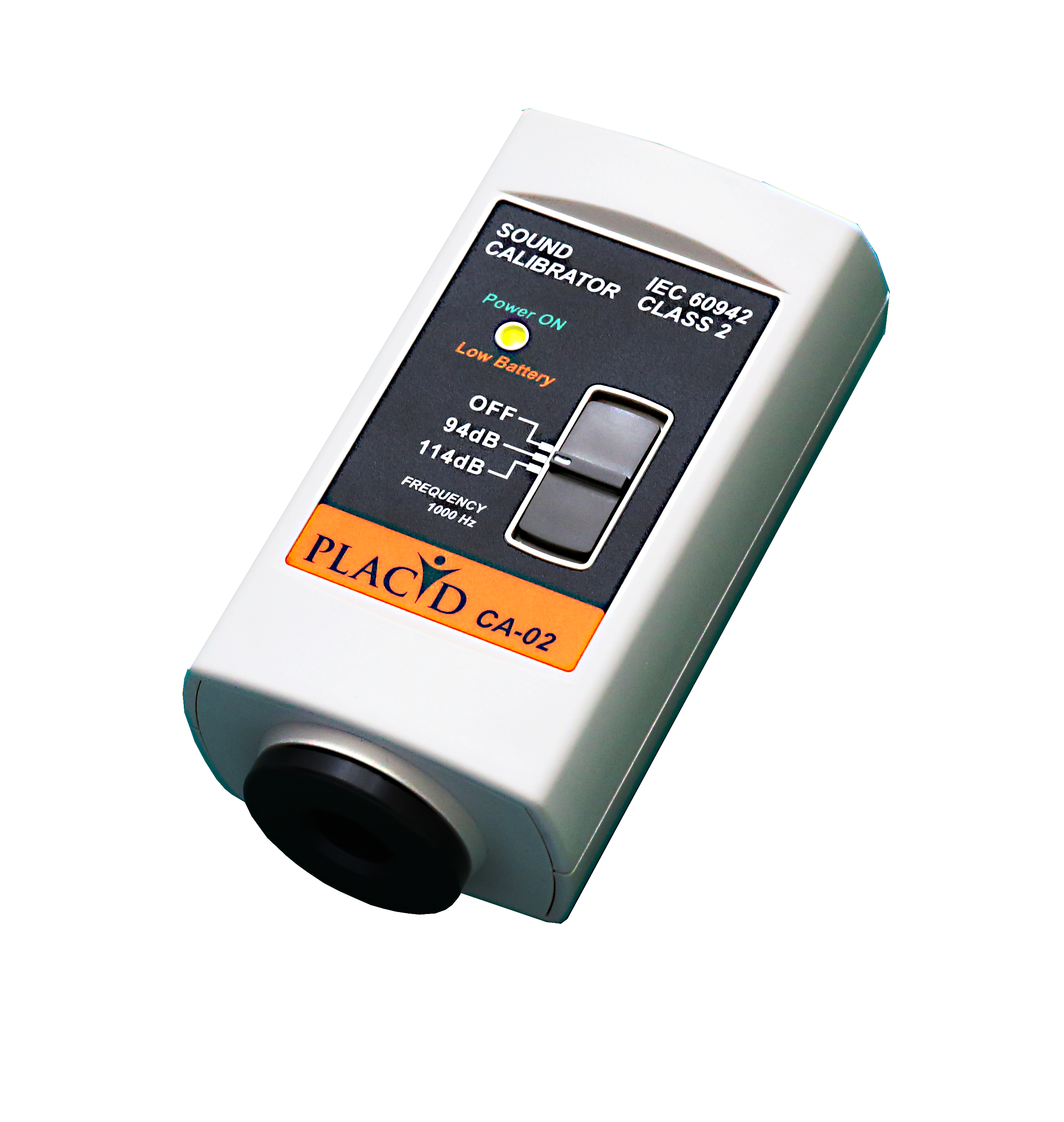
PLACID new range of integrating sound level meters with calibrator (type 2)

PLACID developed a new range of integrating sound level meters with a calibrator. The integrating sound level meter and calibrator are robust yet light and very easy to use.

Ideal for safety officers in factories, for sound enforcement in entertainment venues, to measure noise nuisance, road traffic, airport noise etc. etc.

Read more about PLACID instruments.

PLACID CA-02 Calibrator for sound level meter

Categories
Noise and Vibration Product News

SPEKTRA improved True Free Field Calibration system, CS18FF

SPEKTRA improved True Free Field Calibration system, CS18FF

SPEKTRA improved True Free Field Calibration system, CS18FF

  • CS18 FF: The Free Field Calibration System contains a newly improved anechoic chamber.
  • The new developed chamber is very easy to disassemble and assemble, practical for shipping , moving.
  • It has excellent free field properties in the full range of frequencies from 125 Hz to 20 kHz
  • A LED lightning system has been added to the chamber
  • To position the DUT precisely and read out the sound level meter display clearly we 2 camera’s are installed in the anechoic chamber.
  • The modular structure of the chamber allows an easy modification of the anechoic chamber for other frequency ranges or test purposes
  • The anechoic chamber is equipped with 4 wheels for easy handling / moving

SPEKTRA CS18FF datasheet

cs18ff-spektra-anechoic-roomcs18ff-spektra-anechoic-room
cs18ff-spektra-anechoic-room
Categories
Noise and Vibration Product News

Nor145 released !

Nor145 released !

Nor145 is a single channel unit optimized for easy connectivity to NorCloud, NorRemote or Nor850, through the built-in WLAN and 3G/4G LTE modem. Read more.

USAThailandMalaysiaIndiaIndonesiaVietnamPhilippines